Proximate and mineral composition of venezuelan cocoa beans from Cata and Cuyagua
Abstract
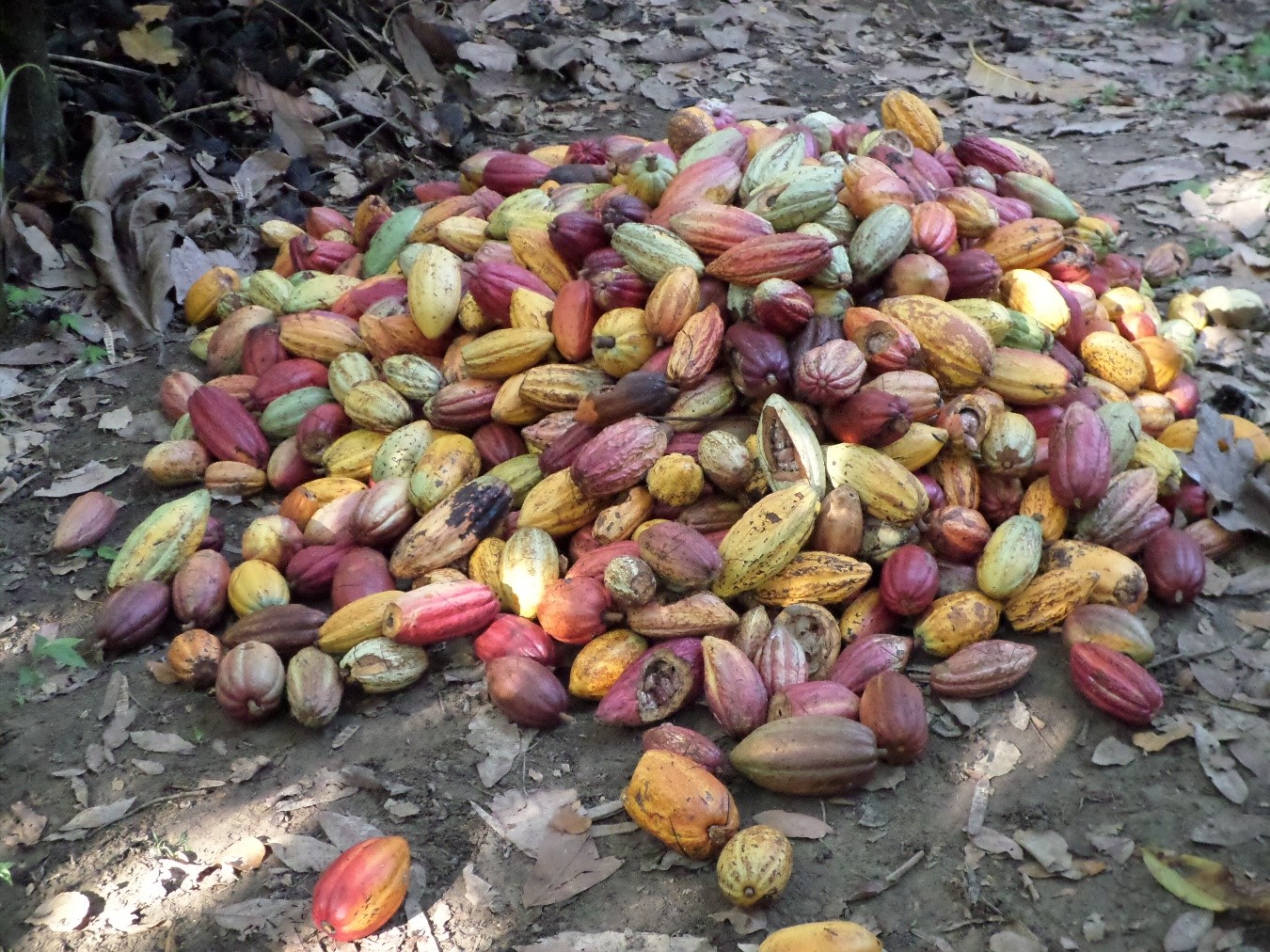
Venezuelan cocoa is renowned for its high sensory quality; however, the presence of heavy metals may restrict its access to highly regulated international markets such as the European Union. This study aimed to evaluate the proximate composition and mineral content of cocoa beans (Theobroma cacao L.) collected from Cata and Cuyagua (Aragua, Venezuela) during the main harvest seasons of 2013 and 2014. Thirty samples (15 per year) were analyzed. Proximate composition was determined using official AOAC methods, while mineral elements were quantified following microwave-assisted acid digestion and ICP- OES analysis. Results showed that moisture content was significantly higher in 2013 compared to 2014 (p<0.001), whereas fat, protein, ash, and carbohydrate contents did not differ between years. Significant interannual differences were observed in mineral composition, with higher concentrations of Ca, Cu, Fe, Mg, and Mn in 2013, and increased levels of K and Na in 2014. Cadmium exhibited a non-significant decrease between years (1.62 - 1.04 mg.kg-1), while chromium remained low and stable. Arsenic and mercury were detected only at trace levels, with no significant differences between years. These results provide reference values for cocoa produced in Cata and Cuyagua, confirm interannual variability in proximate and mineral composition, and emphasize the importance of continuous monitoring of cadmium and other metals to ensure compliance with international regulations.
Downloads
References
Arévalo-Gardini, E., Arévalo-Hernández, C. O., Baligar, V. C., & He, Z. L. (2017). Heavy metal accumulation in leaves and beans of cacao (Theobroma cacao L.) in major cacao growing regions in Peru. Science of the Total Environment, 605–606, 792–800. https://doi.org/10.1016/j.scitotenv.2017.06.122.
Barraza, F., Schreck, E., Lévêque, T., Uzu, G., López, F., Ruales, J., & Maurice, L. (2017). Cadmium bioaccumulation and gastric bioaccessibility in cacao: A field study in areas impacted by oil activities in Ecuador. Environmental Pollution, 229, 950–963. https://doi.org/10.1016/j.envpol.2017.07.080.
Codex Alimentarius Commission. (2019). General standard for contaminants and toxins in food and feed (CXS 193-1995). FAO/WHO. http://www.fao.org/fao-who-codexalimentarius/codex-texts/list-standards/en/.
European Union. (2014). Commission Regulation (EU) No 488/2014 of 12 May 2014 amending Regulation (EC) No 1881/2006 as regards maximum levels of cadmium in foodstuffs. Official Journal of the European Union, L138, 75–79. https://eur-lex.europa.eu/legal-content/EN/TXT/?uri=CELEX:32014R0488.
European Union. (2023). Commission Regulation (EU) 2023/915 of 25 April 2023 on maximum levels for certain contaminants in food and repealing Regulation (EC) No 1881/2006. Official Journal of the European Union, L119, 103–157. https://eur-lex.europa.eu/legal-content/EN/TXT/?uri=CELEX:32023R0915.
García-Porras, G. A., dos Santos, J. A., de Carvalho, M. R., Pinzón-Sandoval, E. H., Pereira, A. A. S., & Guimarães Guilherme, L. R. (2025). Addressing cadmium in cacao farmland: A path to safer, sustainable chocolate. Agriculture, 15(4), 433. https://doi.org/10.3390/agriculture15040433.
Gramlich, A., Tandy, S., Gauggel, C., López, M., Perla, D., Gonzalez, V., & Schulin, R. (2018). Soil cadmium uptake by cocoa in Honduras. Science of the Total Environment, 612, 370–378. https://doi.org/10.1016/j.scitotenv.2017.08.145.
IBM Corp. (2013). IBM SPSS Statistics for Windows, Version 22.0. IBM Corp., Armonk, NY, USA.
Katz, D. L., Doughty, K., & Ali, A. (2011). Cocoa and chocolate in human health and disease. Antioxidants & Redox Signaling, 15(10), 2779–2811. https://doi.org/10.1089/ars.2010.3697
Lanza, J. G., Churión, P. C., Liendo, N. J., & López, V. H. (2016). Evaluación del contenido de metales pesados en cacao (Theobroma cacao L.) de Santa Bárbara del Zulia, Venezuela. Revista Saber (UDO), 28(1), 106–115. http://saber.udo.edu.ve/index.php/saber/article/view/2103/1333
Meter, A., Atkinson, R. J., & Laliberté, B. (2019). Cadmium in cacao from Latin America and the Caribbean: A review of research and potential mitigation solutions. Biodiversity International 73 p. ISBN: 978-92-9255-135-3. https://cgspace.cgiar.org/items/09f7fa1c-962c-4868-99c5-88bbf9cb17b1
NIST. (2015). Standard Reference Material 2387: Peanut butter (for metals analysis). National Institute of Standards and Technology. https://www-s.nist.gov/srmors/view_detail.cfm?srm=2387.
NIST. (2016). Standard Reference Material 1549a: Whole milk powder. National Institute of Standards and Technology. https://www-s.nist.gov/srmors/view_detail.cfm?srm=1549a
Padilla, E., Cedeño-Sares, L. A., Domínguez, J., Dután, F. B., Rodríguez, A., Tinoco, E., & Fernández, L. (2025). Cuantificación de cadmio en muestras de almendras de Theobroma cacao venezolano. Revista DYNA, 92(235), 134–141. https://doi.org/10.15446/dyna.v92n235.117059.
Portillo, E., Graziani de Farinás, L., & Betancourt, E. (2012). Análisis químico del cacao criollo porcelana (Theobroma cacao L.) en el Sur del Lago de Maracaibo. Revista de la Facultad de Agronomía (LUZ), 24(3), 522–546. https://produccioncientificaluz.org/index.php/agronomia/article/view/2662.
World Health Organization. (2011). Safety evaluation of certain contaminants in food. WHO Food Additives Series: 63. World Health Organization. https://inchem.org/documents/jecfa/jecmono/v63je01.pdf
Copyright (c) 2026 José Gregorio Lanza

This work is licensed under a Creative Commons Attribution-NonCommercial-ShareAlike 4.0 International License.