A aplicação exógena de prolina pode aumentar a tolerância do sorgo doce (Sorghum bicolor (L.) Moench) sob estresse por déficit hídrico
Resumo
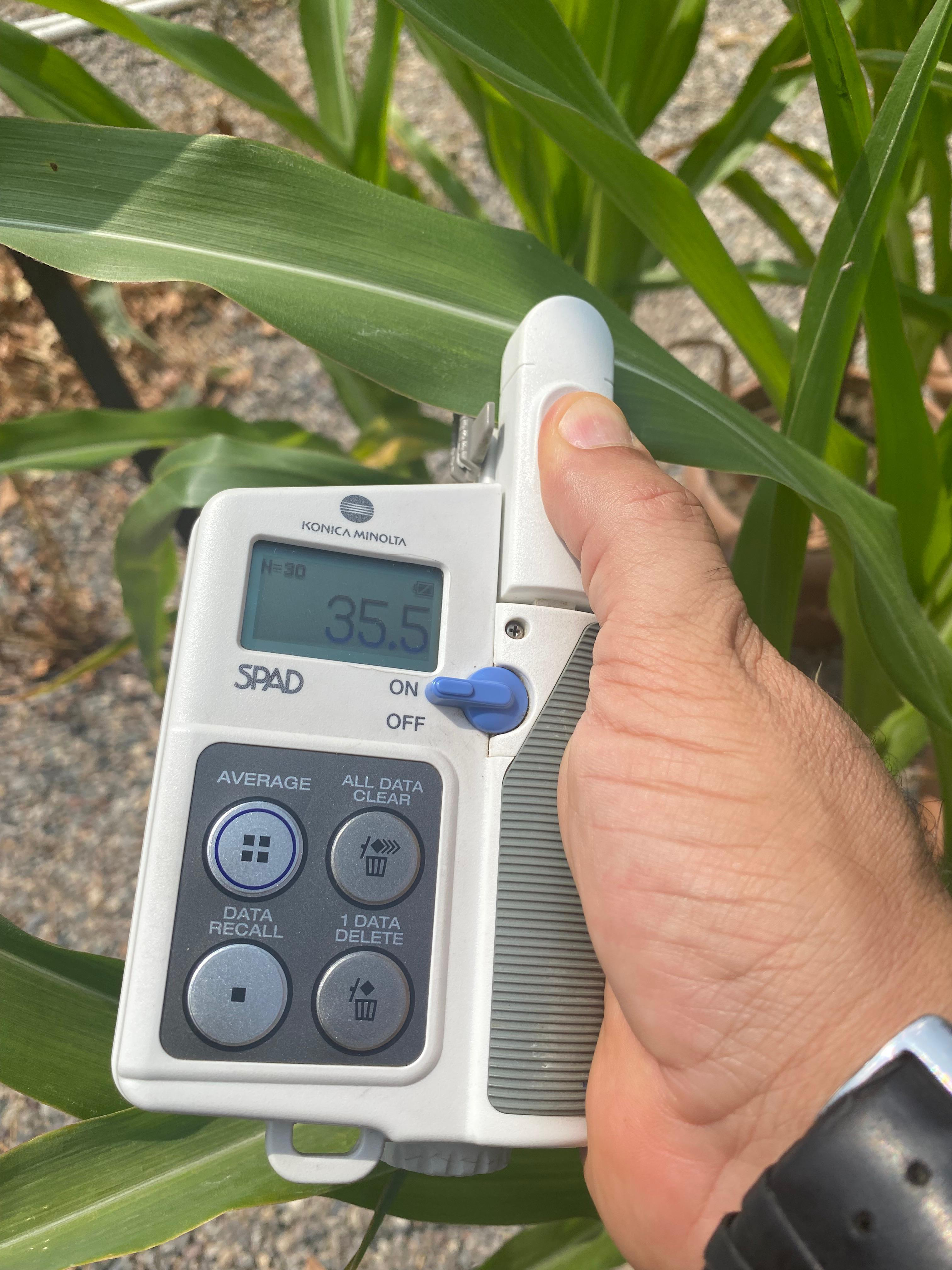
A seca é um importante estresse abiótico que ameaça a segurança alimentar global ao reduzir o rendimento e a qualidade das culturas. A aplicação foliar de osmoprotetores, como a prolina, oferece um meio promissor para mitigar os danos induzidos pela seca. Este estudo examinou os efeitos da prolina exógena (P0, P200, P400 e P600 mg.L-1), do genótipo de sorgo e de sua interação sobre características morfológicas, fisiológicas, bioquímicas, de qualidade forrageira e microbianas sob diferentes níveis de seca (I100, I75, I50 e I25). A aplicação de prolina aumentou a matéria seca em mais de 100 % sob déficits médios a severos e elevou o peso seco da raiz em 90 % com uma redução de 75 % da água. A resposta mais intensa ocorreu no conteúdo de clorofila (SPAD), refletindo maior estabilidade fotossintética. A prolina exógena reduziu o ressecamento foliar em 25 % e atenuou os declínios da qualidade forrageira relacionados à seca, conforme evidenciado pelas melhorias em NDF, ADF e ADL. Também aumentou a atividade da peroxidase em maior grau do que a superóxido dismutase e a catalase, minimizando a toxicidade do peróxido de hidrogênio (H₂O₂) e o estresse oxidativo. Mesmo sob seca extrema (I25), a prolina manteve o vigor das plantas e melhorou a eficiência do uso da água em 25 - 40 % na fase de plântula. Em comparação com o controle, o conteúdo de clorofila foliar (valores SPAD) diminuiu em 13.91 %, 24.28 % e 31.85 % sob os tratamentos I75, I50 e I25, respectivamente, sugerindo que as medições SPAD na fase de plântula podem servir como um indicador prático e de baixo custo para identificar genótipos de sorgo tolerantes à seca.
Downloads
Referências
Ali, Z., Merrium, S., Habib-Ur-Rahman, M., Hakeem, S., Saddique, M. A. B., & Sher, M. A. (2022). Wetting mechanism and morphological adaptation; leaf rolling enhancing atmospheric water acquisition in wheat crop. Environmental Science and Pollution Research, 29, 30967-30985. https://doi.org/10.1007/s11356-022-18846-3
Bänzinger, M., Edmeades, G. O., Beck, D., & Bellon, M. (2000). Breeding for drought and nitrogen stress tolerance in Maize: from theory to practice. pp.68. http://hdl.handle.net/10883/765
Blessington, T., Mitcham, E. J., & Harris, L. J. (2014). Growth and survival of enterobacteriaceae and inoculated salmonella on walnut hulls and maturing walnut fruit. Journal of Food Protection, 77(9), 1462-1470. http://doi.org/10.4315/0362-028X.JFP-14-075
Cheng, M., Wang, H., Fan, J., Zhang, F., & Wang, X. (2021). Effects of soil water deficit at different growth stages on corn growth, yield, and water use efficiency under alternate partial root-zone irrigation. Water, 13, 148. http:// doi.org/10.3390/w13020148
Ferreira, G,, Burch, A,, Martin, L, L., Hines, S. L., Shewmaker, G. E., & Chahine, M. (2021). Effect of drought stress on in situ ruminal starch degradation kinetics of corn for silage. Animal Feed Science and Technology, 279, 115027. https://doi.org/10.1016/j.anifeedsci.2021.115027
George, T. T., Obilana, A. O., Oyenihi, A. B., Obilana, A. B., Akamo, D. O., & Awika, J. M. (2022). Trends and progress in sorghum research over two decades, and implications to global food security. South African Journal of Botany, 151, 960-969. https://doi.org/10.1016/j.sajb.2022.11.025
Hayat, S., Hayat, Q., Alyemeni, M. N., Wani, A. S., Pichtel, J., & Ahmad, A. (2012). Role of proline under changing environments: a review. Plant signaling & behavior, 7(11), 1456–1466. https://doi.org/10.4161/psb.21949
Ibrahim, A. E-A., Abd El Mageed, T., Abohamid, Y., Abdallah, H., El-Saadony, M., AbuQamar, S., El-Tarabily, K., & Abdou, N. (2022). Exogenously applied proline enhances morph-physiological responses and yield of drought-stressed corn plants grown under different irrigation systems. Frontiers Plant Science, 13, 897027. http:// doi.org/10.3389/fpls.2022.897027
ISO, (2017). Microbiology of food chain - Horizontal method for the detection and enumeration of Enterobacteriaceae - Part 2: Colony-count technique. https://www.iso.org/obp/ui/en/#iso:std:iso:21528:-2:ed-2:v2:en
Jack, C. N., Row, S. L., Porter, S. S., & Friesen, M. L. (2019). A high-throughput method of analyzing multiple plant defensive compounds in minimized sample mass. Applications in Plant Sciences, 7(1), e01210. http:// doi.org/10.1002/aps3.1210
Kale, H., Kaplan, M., Ulger, I., Unlukara, A., & Akar, T. (2018). Feed value of corn (Zea mays var. indentata (sturtev.) l.h. bailey) grain under different irrigation levels and nitrogen doses. Turkish Journal Field Crops, 23(1), 56-61. http:// doi.org/10.17557/tjfc.421974
Kalhoro, S., Ding, K., Zhang, B., Chen, W., Hua, R., Shar, D., & Xuexuan, X. (2018). Soil infiltration rate of forestland and grassland over different vegetation restoration periods at Loess Plateau in northern hilly areas of China. Landscape and Ecological Engineering, 15. https:// doi.org/10.1007v/s11355-018-0363-0
Khan, P., Abdelbacki, A. M. M., Albaqami, M., Jan, R., & Kim, K. M. (2025). Proline promotes drought tolerance in maize. Biology, 14, 41. https://doi.org/10.3390/biology14010041
Kordas, L., Lejman, A., Kuc, P., Szlachta, J., Fugol, M., & Prask, H. (2024). The reaction of maize and sorghum to fertilization with granulated fertilizer obtained from digestate. Polish Journal of Environmental Studies, 33(2), 1215-1223. http:// doi.org/10.15244/pjoes/172049
Li, H., Liu, Y., Zhen, B., Lv, M., Zhou, X., Yong, B., Niu, Q., & Yang, S. (2024). Proline spray relieves the adverse effects of drought on wheat flag leaf function. Plants, 13(7), 957. https://doi.org/10.3390/plants13070957
Marček, T., Hamow, K. Á., Végh, B., Janda, T., Darko, E., & Lambreva, M. D. (2019). Metabolic response to drought in six winter wheat genotypes. PLOS One, https://doi.org/10. 1371/ journal.pone.0212411
Mi, N., Cai, F., Zhang, Y. S., Ji, R. P., Zhang, S. J., & Wang, Y. (2018). Differential responses of corn yield to drought at vegetative and reproductive stages. Plant Soil and Environment, 64(6), 260-267. https://doi.org/10.17221/141/2018-PSE
Mittler, R., Zandalinas, S. I., Fichman, Y., & Van Breusegem, F. (2022). Reactive oxygen species signalling in plant stress responses. Nature Reviews Molecular Cell Biology, 23, 663-679. https://doi.org/10.1038/s41580-022-00499-2
Nguyen, H. C., Lin, K. H., Ho, S. L., Chiang, C. M., & Yang, C. M. (2018). Enhancing the abiotic stress tolerance of plants: From chemical treatment to biotechnological approaches. Physiologia Plantarum, 164, 452-466. http:// doi.org/10.1111/ppl.12812
Noein, B., & Soleymani, A. (2022). Corn (Zea mays L.) physiology and yield affected by plant growth regulators under drought stress. Journal of Plant Growth Regulation, 41, 672-681. https://doi.org/10.1007/s00344-021-10332-3
Shah, A. A., Khan, W. U., Yasin, N. A., Akram, W., Ahmad, A., & Abbas, M. (2020). Butanolide alleviated cadmium stress by improving plant growth, photosynthetic parameters and antioxidant defense system of Brassica oleracea. Chemosphere, 261, 127728. http:// doi.org/10.1016/j.chemosphere.2020.127728
Sher, A., Hassan, M. U., Sattar, A., Ul-Allah, S., Ijaz, M., Hayyat, Z., Bibi, Y., Hussain, M., & Qayyum, A. (2023). Exogenous application of melatonin alleviates the drought stress by regulating the antioxidant systems and sugar contents in sorghum seedlings. Biochemical Systematics and Ecology 107, 104620. https://doi.org/10.1016/j.bse.2023.104620
Smart, R. E., & Bingham, G. E. (1974). Rapid estimates of relative water content. Plant Physiology, 53(2), 258-260. https://doi.org/10.1104/pp.53.2.258
Trovato, M., Forlani, G., Signorelli, S., & Funck, D. (2019). Proline metabolism and it’s functions in development and stress tolerance. In book: Osmoprotectant-Mediated Abiotic Stress Tolerance in Plants (pp.41-72). Springer Nature Switzerland. http://doi.org/10.1007/978-3-030-27423-8 2
Van Soest, P. J., Robertson, J. B., & Lewis, B. A. (1991). Methods for dietary fiber, neutral detergent fiber, and non starch polysaccharides in relation to animal nutrition. Journal of Dairy Science, 74, 3583-3597. https://doi.org/10.3168/jds.S0022-0302(91)78551-2
Velikova, V., Yordanov, I., & Edreva, A. (2000). Oxidative stress and some antioxidant systems in acid rain-treated bean plants: protective role of exogenous polyamines. Plant Science, 151(1), 59-66. https://doi.org/10.1016/S0168-9452(99)00197-1
Yahaya, M. A., & Shimelis, H., (2021). Drought stress in sorghum: Mitigation strategies, breeding methods and technologies. Journal of Agronomy and Crop Science, 208, 127-142. https://doi.org/10.1111/jac.12573
Zahra, N., Hafeez, M. B., Kausar, A., Alzeidi, M., Asekova, S., Siddique, K. H. M., & Farooq, M. (2023). Plant photosynthetic responses under drought stress: Effects and management. Journal of Agronomy and Crop Science, 209, 651-672. https://doi.org/10.1111/jac.12652
Zhang, R., Yang, P., Liu, S.,Wang, C., & Liu, J. (2022). Evaluation of the methods for estimating leaf chlorophyll content with SPAD Chlorophyll Meters. Remote Sensing, 14, 5144. https://doi.org/10.3390/rs14205144
Direitos de Autor (c) 2026 Timuçin Taş, Orkun Babacan, Tülay Turgut Genç, Yahya Işik, Hüseyin Güngör

This work is licensed under a Creative Commons Attribution-NonCommercial-ShareAlike 4.0 International License.